Introduction In June 2000, South Korea and North Korea achieved a historic milestone with the first-ever Inter-Korean Summit. This unprecedented meeting between South Korean President Kim Dae-jung and North Korean leader Kim Jong-il marked a dramatic shift in relations on the Korean Peninsula after decades of hostility, division, and military tension. Background: Decades of Division Since the end of the Korean War in 1953, the Korean Peninsula had remained divided, heavily militarized, and politically frozen. Communication between the two Koreas was minimal, and mutual distrust defined their relationship for nearly half a century. The Sunshine Policy, introduced in 1998, laid the groundwork for dialogue by promoting engagement, humanitarian cooperation, and confidence-building measures rather than confrontation. The 2000 Pyongyang Summit From June 13 to June 15, 2000, President Kim Dae-jung visited Pyongyang, becoming the first South Korean leader to do so. His...
Introduction
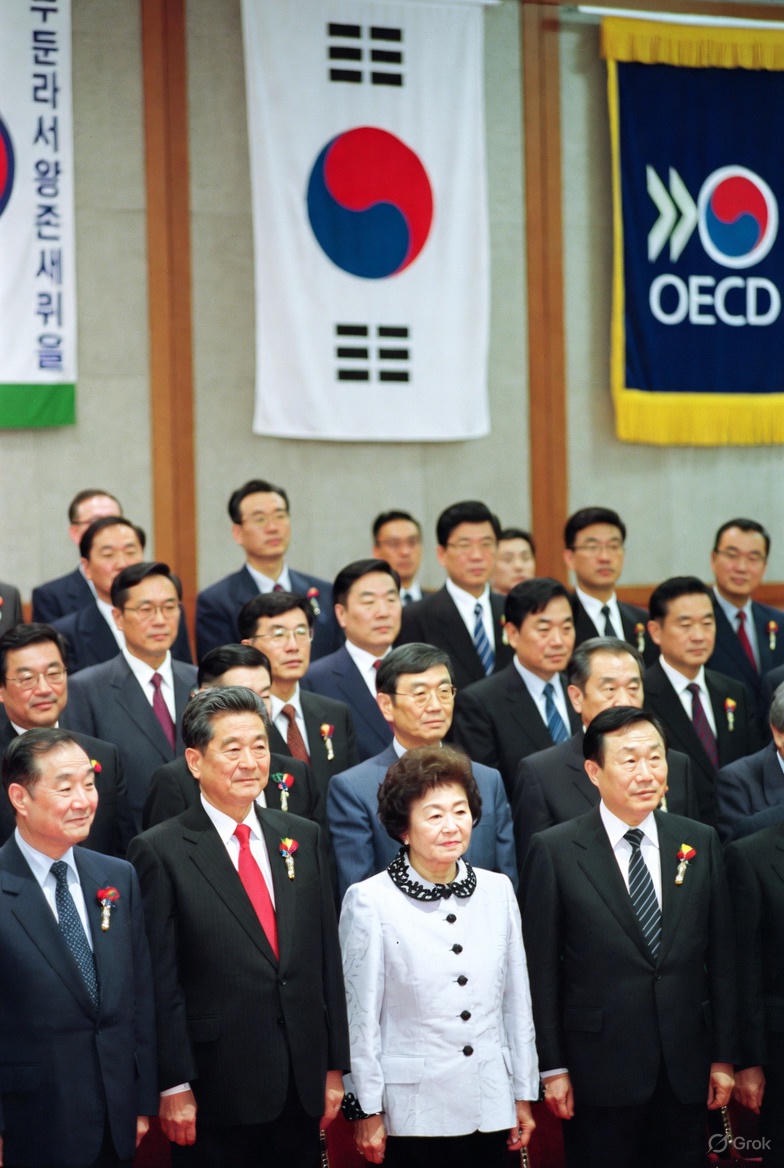
In 1996, South Korea took a historic step that reshaped its economy and international image: joining the Organisation for Economic Co-operation and Development (OECD), often referred to as the “club of developed nations.”
This milestone was more than a diplomatic achievement; it marked South Korea’s official transition from a developing country to a recognized global economic power.
From Poverty to Global Ambition
South Korea’s journey to OECD membership was long and challenging. Only a few decades earlier, the nation was among the poorest in the world, heavily dependent on foreign aid. By the 1990s, thanks to rapid industrialization and export-driven growth, the country had transformed itself.
Key indicators of progress included:
- Expansion of major conglomerates like Samsung, LG, and Hyundai
- A rapidly growing export economy
- Strengthened financial systems
- Political stability and democratic reforms
The international community began to recognize South Korea as a serious economic player.
Joining the OECD: A Milestone
In December 1996, South Korea became the 29th member of the OECD.
Membership meant adhering to international standards in:
- Economic transparency
- Corporate governance
- Labor laws
- Consumer protection
- Education systems
It also allowed South Korean companies to compete confidently on the global stage.
Challenges and Lessons
However, joining the OECD did not mean a smooth path ahead.
Shortly after, South Korea faced the 1997 Asian Financial Crisis, revealing weaknesses in its financial and corporate systems.
Yet, OECD membership accelerated reforms that followed, including:
- Corporate restructuring
- Banking sector improvements
- Governance reforms
These reforms paved the way for South Korea’s modern, resilient economy that is recognized globally today.
Why 1996 Matters
The year 1996 is a turning point in South Korean history because:
- It marked South Korea’s recognition as a global economic power.
- It forced the country to adopt stricter financial and corporate standards.
- It prepared the nation for globalization and international trade.
- It laid the foundation for Korea’s rise in technology, culture, and global influence in the 21st century.
Reflection
“The world respects not just ambition, but the ability to meet international standards of success.”
Comments