
Digital Sex Crimes in South Korea: A Society Facing a New Threat in the Age of Smart Technology

​ In a country widely admired for its technological advancement, ultra-fast internet, and smart cities, South Korea today is grappling with one of its most sensitive and complex social issues: the rise of digital sex crimes and the widespread leaking of private footage through hacked smart cameras. Although South Korea has long been seen as a pioneer of digital innovation, the same technology has created a new environment filled with legal, ethical, and social challenges. How the Crisis Began: When Smart Tech Becomes a Threat Over the past months, Korean media has been shaken by shocking revelations: Tens of thousands of private clips—captured through home security cameras, office cameras, and even hotel devices—were leaked and sold through hidden online networks. The real shock was not just the existence of these videos, but the scale of the breach and how easily hackers were able to access devices used daily by millions of people. Why This Is Not Just a Crime, But a Social Issue Beca...
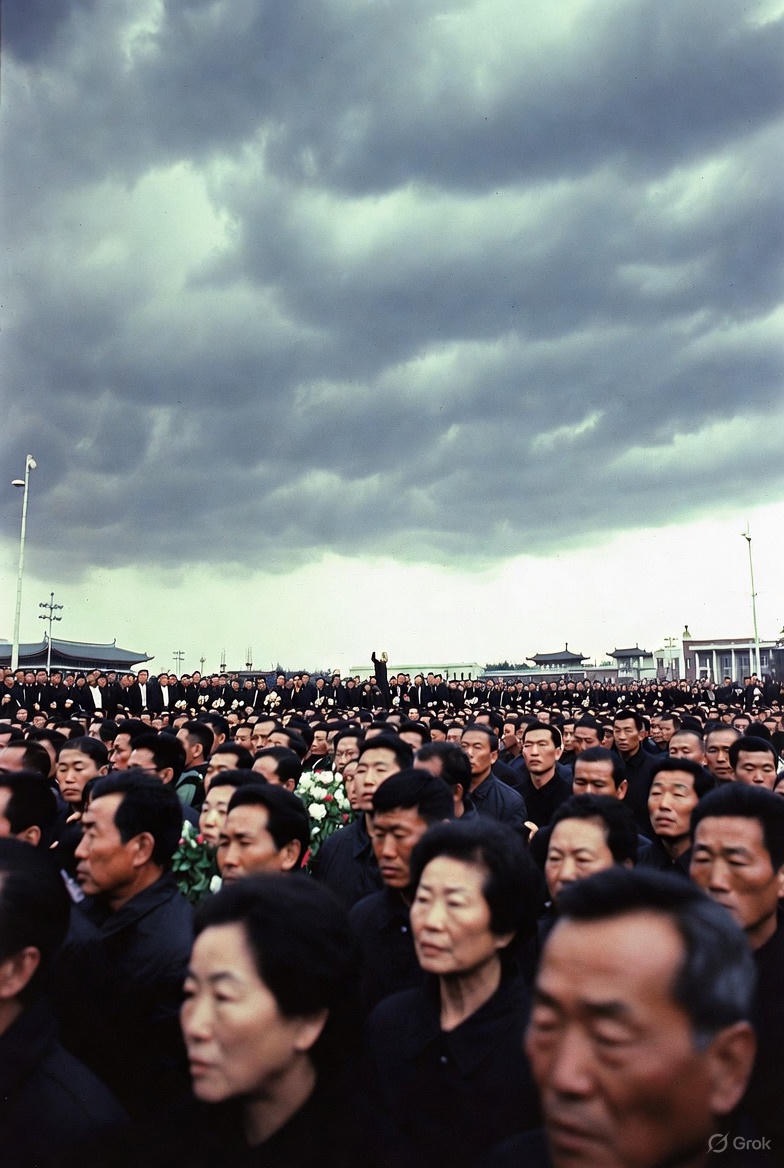
1994 – The Death of Kim Il-sung and Renewed Tension on the Korean Peninsula

In 1994, one of the most pivotal events in Korean Peninsula history occurred: the death of Kim Il-sung, the founding leader of North Korea. His passing marked the end of an era and introduced a period of uncertainty that heavily affected relations between North and South Korea.


Kim Il-sung had ruled North Korea since 1948 with absolute authority, shaping the nation’s political ideology, military strategy, and isolationist policies. His death raised immediate concerns across the region. Many feared political instability, potential military aggression, or a power struggle within the North Korean regime.


This transition placed Kim Jong-il, his son, in power — a moment that signaled a new phase in inter-Korean dynamics. South Korea watched closely, uncertain whether the leadership change would lead to reform or intensified hostility.


During this period, tensions escalated due to North Korea’s suspected nuclear ambitions. Diplomatic talks between Pyongyang and Washington gained urgency, eventually leading to the signing of the Agreed Framework in late 1994, aimed at freezing North Korea’s nuclear program in exchange for aid and reactors.


For South Korea, 1994 was a reminder that despite democratic progress and economic growth at home, the peninsula remained vulnerable to sudden political shifts in the North.


Key Point: The death of Kim Il-sung reshaped regional security and marked the beginning of a new, more unpredictable era in North–South relations.


Comments

Popular posts from this blog

1995 – The Sampoong Department Store Collapse

​ In 1995, South Korea experienced one of the deadliest peacetime disasters in its modern history: the collapse of the Sampoong Department Store in Seoul. This tragedy not only shook the nation but also exposed critical weaknesses in construction standards, corruption, and urban safety regulations. On June 29, 1995, the five-story building suddenly collapsed during peak shopping hours. Poor design changes, illegal structural modifications, and ignored warning signs led to the catastrophe. Over 500 people lost their lives, and thousands were injured, making it one of the worst building failures in the world. Investigations revealed that the collapse was preventable. Engineers had warned of cracks appearing in the structure days earlier, but store executives prioritized business operations over safety. This scandal ignited public outrage and triggered sweeping reforms in construction laws, safety inspections, and urban planning. The disaster became a turning point in South Kore...

Love in South Korea: Cute, Complicated, and Very Korean

​ A deep dive into how romance truly works in modern Korean culture Love in South Korea is a world of its own. It’s gentle but structured, shy yet intense, quiet but deeply emotional. It’s not exactly like K-dramas… yet somehow, it carries the same soft glow. To understand Korean love, you have to understand Korean culture— the traditions, the pressure, the politeness, and the obsession with small details that turn simple relationships into uniquely Korean love stories. Let’s take a deep look into how people fall in love, date, fight, express affection, and even break up in South Korea. The Beginning: Romance in Small Gestures Korean relationships often start before the couple is “official.” It usually begins with: Good morning / Good night texts “Eat well today.” “Drink water.” “Are you home yet?” In many cultures, these are normal. In Korea, these are signals. Tiny hints that someone is interested, without saying it directly. Koreans often express affection through at...

How South Korea Went from the Poorest Country on Earth to a Global Tech Superpower in Just One Generation?

​ Published: December 6, 2025 In 1960, South Korea was poorer than most of today’s African nations. Its GDP per capita was $79 (about $850 in today’s money). People ate tree bark soup during famines. Children walked barefoot to school—if they went at all. The country had no natural resources, no capital, no technology, and had just emerged from a devastating war that left two million dead and almost every factory, bridge, and railway in ruins. Today, in 2025, South Korea: Has the world’s 10th-largest economy Produces 70% of global memory chips Builds the biggest ships on the planet Has the fastest average internet speed (twice as fast as the US) Invented the smartphone foldable screen, 5 nm chips, and the most advanced batteries Exports more culture (K-pop, dramas, games) than France exports wine and fashion combined How did a country with literally nothing become one of the richest, most innovative, and most culturally powerful nations in just 60 years—one single human...